How we frame
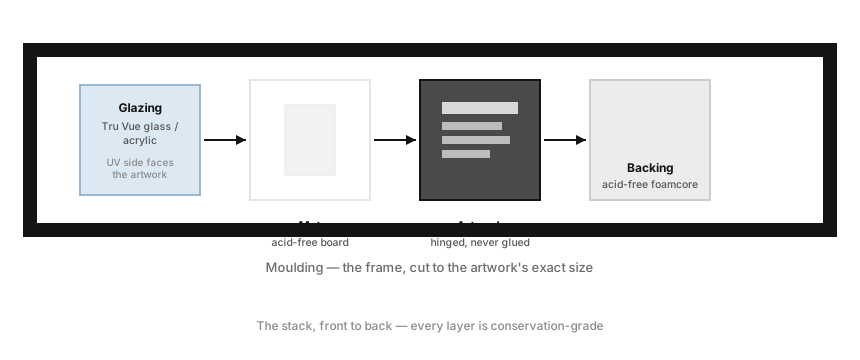
Add framing to any poster or art piece at checkout. Every frame is a stack of conservation-grade materials, assembled so your piece is protected for decades. Add-on prices are in USD.
Glazing tiers
| Tier | Glazing | Add-on | Best for |
|---|---|---|---|
| Standard | Black aluminum frame with standard acrylic | +$300 | Everyday display |
| Conservation | Anti-reflective UV-protective acrylic | +$500 | The default for collectibles |
| Museum | Museum-grade UV-protective acrylic (OPTIUM MUSEUM ACRYLIC) | +$700 | Unbreakable — our pick for shipping |
Conservation and Museum grades are what institutions use — Walters Art Museum, Durham University, Topkapi Palace.

Museum Acrylic — why we recommend it for shipping
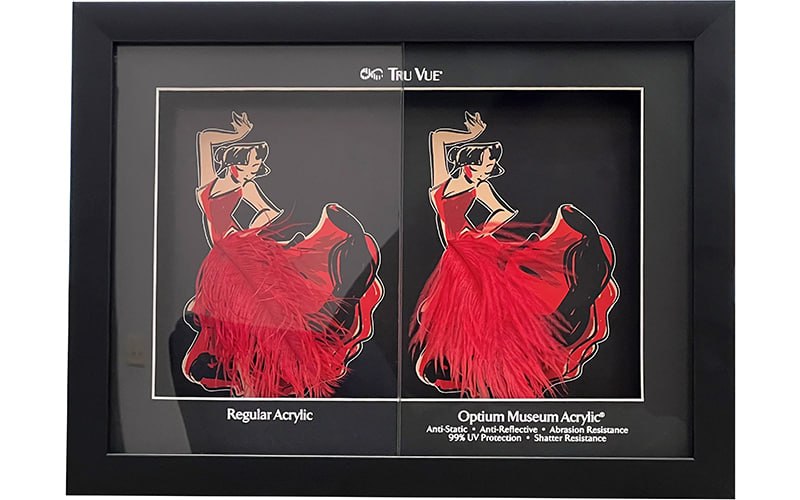
- 99% UV (300–380nm), anti-reflective on both sides, >98% light transmission
- Anti-static + abrasion-resistant hard coat — repels dust, survives transit
- Shatter-resistant — the safest choice for a framed piece that travels
- Photo-safe: passes PAT ISO 18916 and the Oddy museum test
The procedure
- Conservation first — creased vintage posters are flattened and stabilized
- Mat window and moulding cut to the exact size; artwork hinged to acid-free backing, never glued
- Assembled with the glazing's UV side facing the artwork, then sealed with hanging hardware
- Shipped with protective corner guards — museum acrylic recommended for longer journeys